
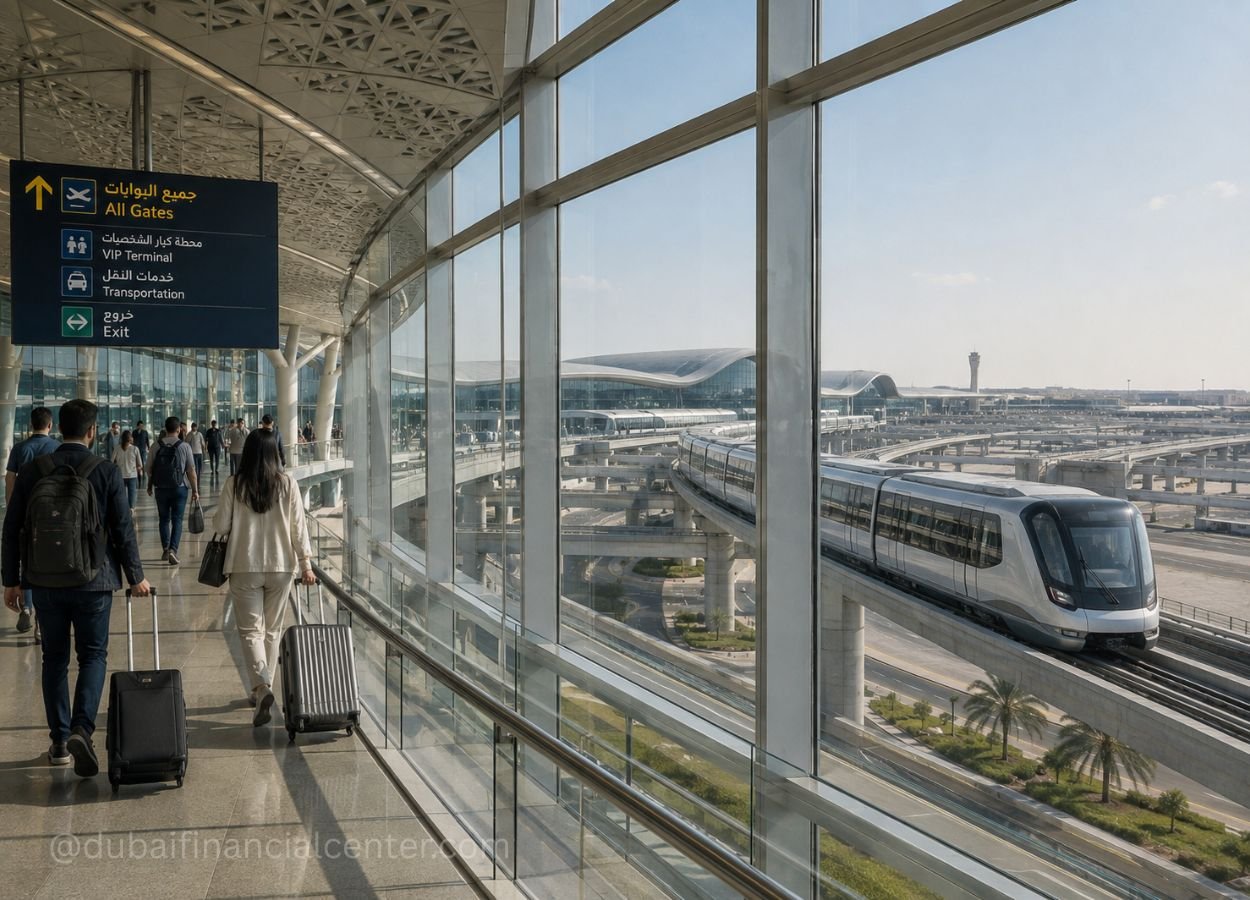

An automated people mover system covering a distance of 50 kilometres will be established at the Dubai Al Maktoum International Airport to form one of the biggest airport passenger transport systems around the world as the emirate works on turning the airport into a global air transport hub. The driver-less system will link nine different stations at the airport and is scheduled to be completed.
This project aims to improve accessibility between various terminal stations and other important places within the airport as the number of passengers increases. Al Maktoum International Airport is currently undergoing development to have a capacity of handling 260 million passengers per year.
Larsen & Toubro and Japan’s Mitsubishi Heavy Industries have secured the contract to design and build the Automated People Mover (APM) system for Phase 1. The scope includes construction, equipment supply, testing, commissioning and preparation for operations, according to L&T.
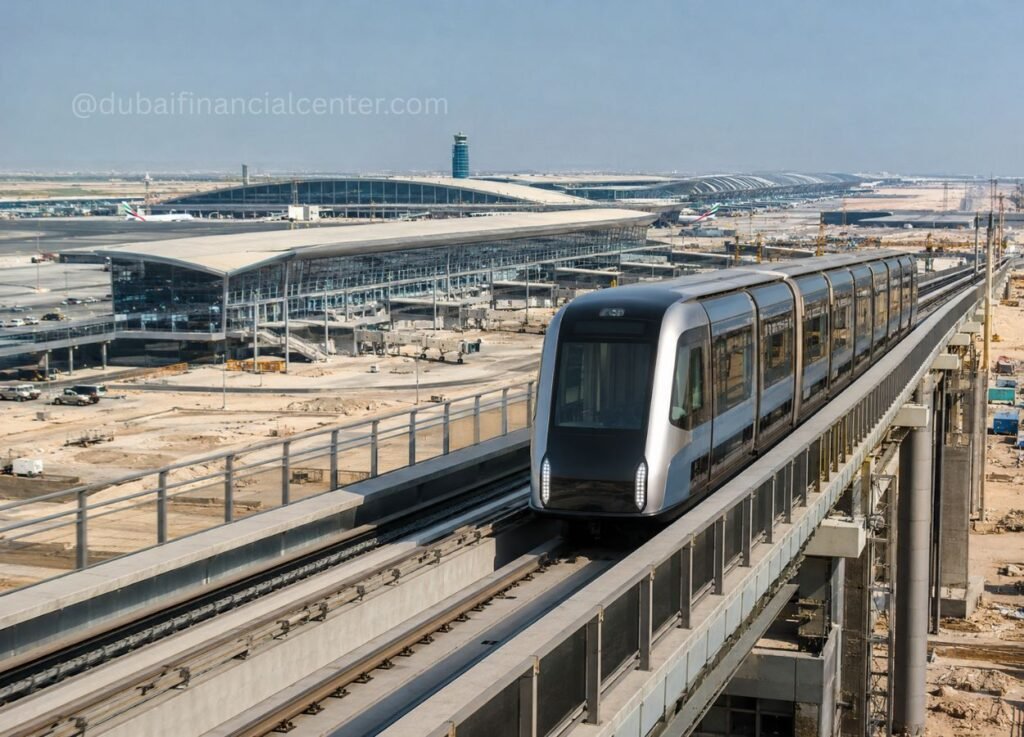
Mitsubishi Heavy Industries will provide the APM vehicles and signalling technology while also handling overall system integration. The planned network will use 165 vehicles and cover approximately 50 kilometres, making it the longest airport APM system of its kind, according to the company.
The airport project is part of Dubai’s long-term strategy to expand its aviation infrastructure and strengthen its position as an international passenger and logistics centre. The new airport is being developed in Dubai South and is expected to become one of the world’s largest aviation facilities once completed.
The wider Al Maktoum International development has a planned opening target of 2032, with additional expansion expected over time. Its design includes multiple terminals, concourses and other major airport facilities, increasing the need for an integrated passenger transportation system.
The 50km people mover will therefore form a key part of the airport’s internal mobility network, allowing passengers and airport users to travel between major facilities without relying on road-based transfers.
With the project targeting capacity of 260 million passengers each year, the automated system is expected to play an important role in supporting Dubai’s ambition to build a high-capacity, connected airport capable of handling rapidly increasing international traffic.