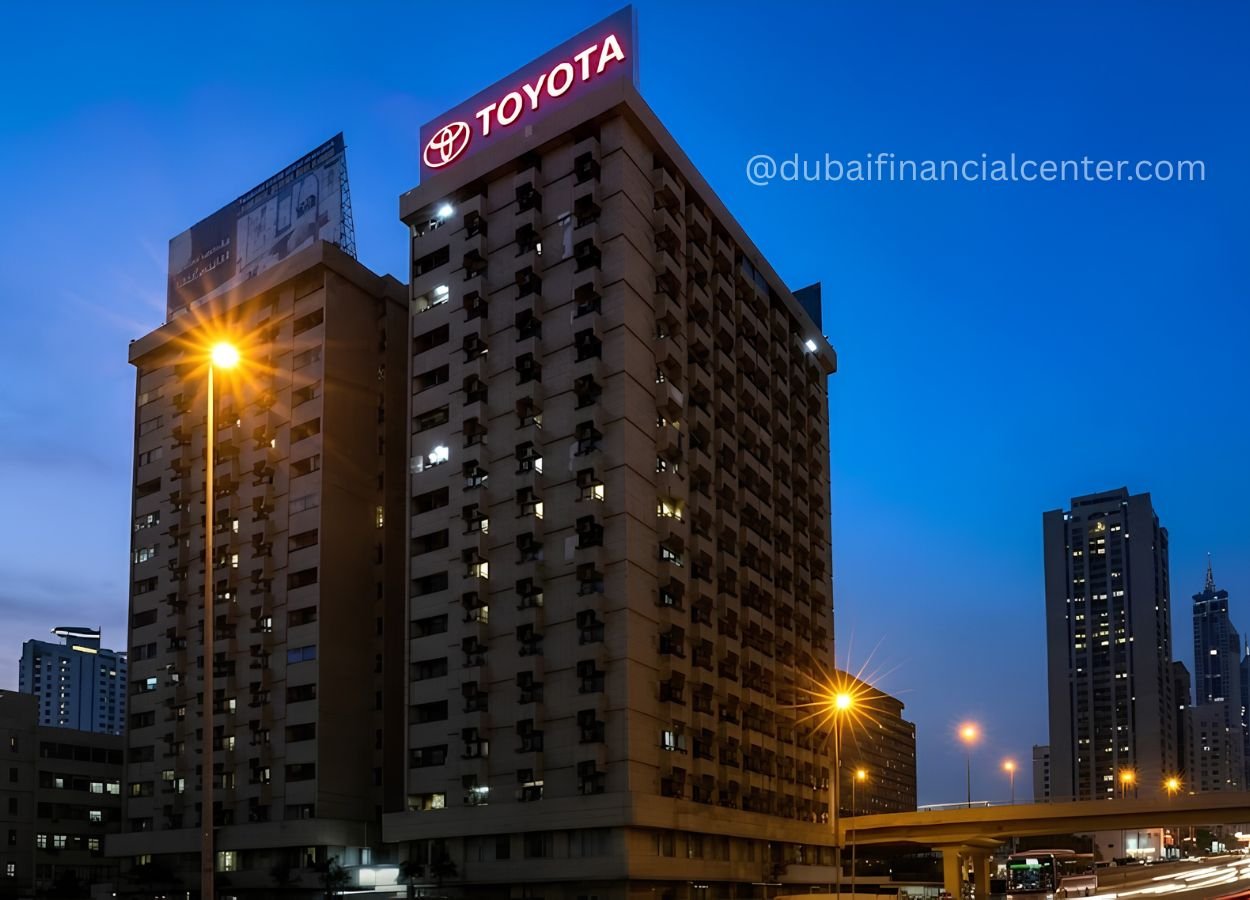

The Nasser Rashid Lootah Building, an old 15-storey residence building which is famous all over the UAE for its popular name “Toyota Building”, will be demolished by the year 2027, thus bringing the life to an end of one of the oldest buildings on Sheikh Zayed Road.
As informed by Nasser Rashid Lootah Real Estate, the property management, the process of tenant clearance of the 65-metre building is going on. The building administration claims that around 95 per cent of tenants have already left the place, while only four flats are still occupied due to disconnection of utilities from cleared flats.
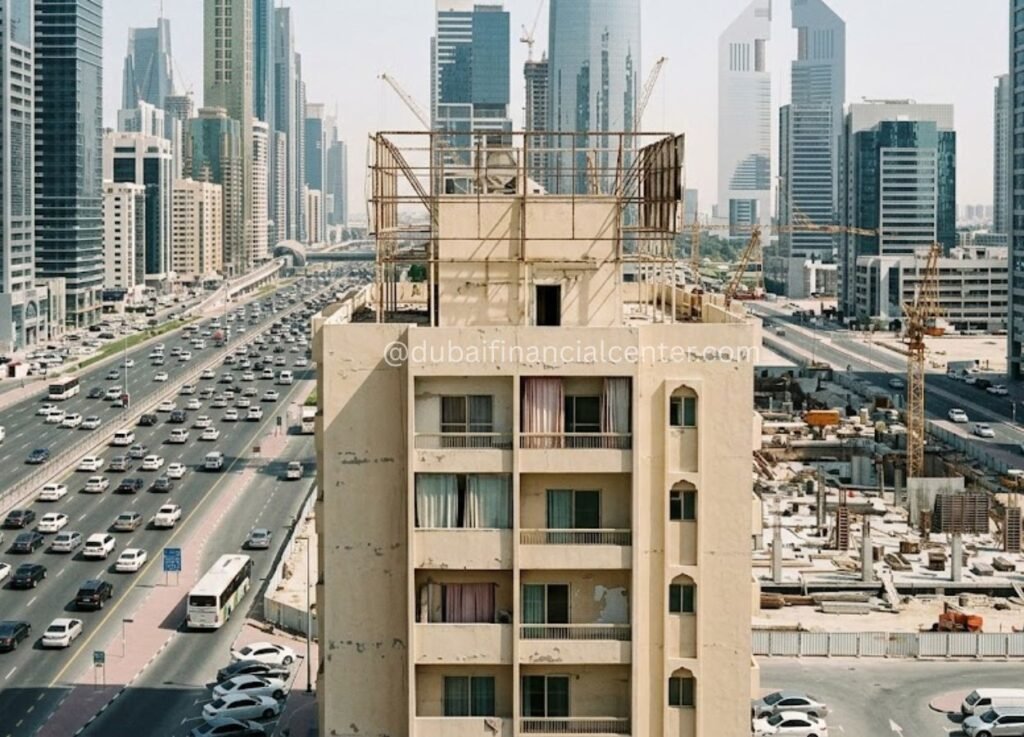
Management representatives attributed the decision to tear down the 52-year-old complex to aging structural conditions and an inability to secure regulatory approvals for further comprehensive maintenance from municipal authorities. The property clearance process has been accelerated by municipal enforcement actions targeting safety violations and severe overcrowding linked to unauthorised room partitioning, with municipal inspectors identifying individual residential units housing as many as 15 residents.
Completed in 1974, the 15-storey tower stood among the first three major residential developments constructed near what was then known as Defence Roundabout or First Roundabout. The property earned its famous moniker in 1981 following the installation of a massive neon Toyota advertisement on its rooftop. The red-and-white display remained a prominent navigational reference point along the highway for nearly four decades until its temporary removal in 2018, before being reinstated by Toyota UAE in June 2022.
The scheduled clearance closes a key chapter in Dubai’s early urban development history. While aging facilities and municipal compliance actions have hastened tenant departures, long-term occupants have noted that the tower’s central location and accessible rental rates provided a rare link to the city’s modern foundational era along a commercial highway corridor now dominated by ultra-modern glass skyscrapers and contemporary commercial developments.
Beyond its physical architecture, the building represents a historic era of Dubai’s rapid metropolitan expansion during the mid-1970s. As the city prepares for the 2027 site clearance, urban planning observers note that the transition reflects a broader regional trend of replacing mid-century infrastructure with modern high-density mixed-use developments to meet evolving structural safety codes, energy efficiency benchmarks, and growing urban housing demands along key transit arteries.