

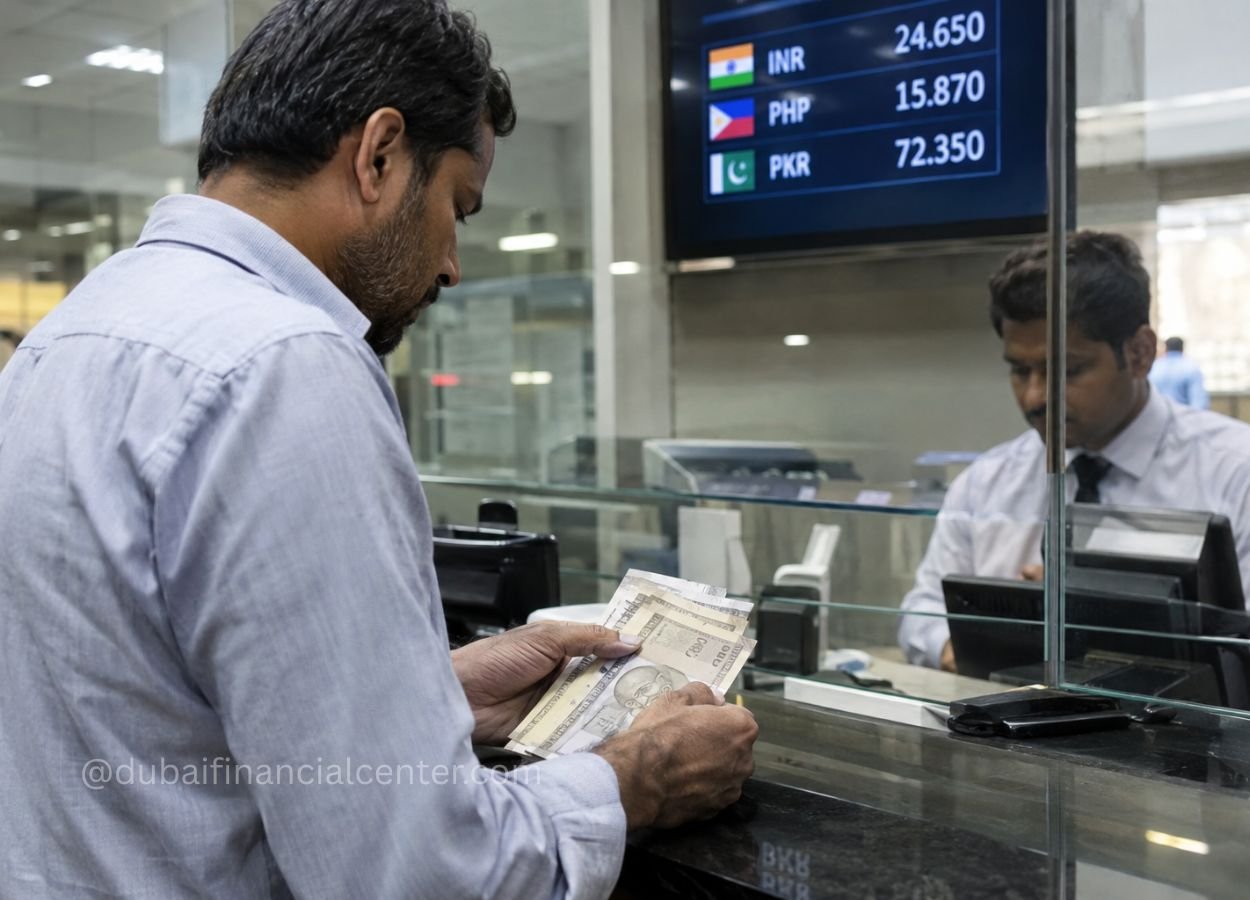

Expatriate workers based in the UAE have become beneficiaries of improved purchasing capacity through outward remittances, as major Asian currencies such as the Indian rupee, Philippine peso, and Pakistani rupee approach record levels against the UAE dirham. Financial dynamics have thus created a favourable remittance channel for millions of Asian expatriates making ends meet at home. Asian Currency Depreciation UAE Remittance
Asian emerging economies continue to experience currency devaluation due to global economic fundamentals. Increasing costs of energy imports, global trade deficits, capital flows from foreign portfolios, and the continued strength of the US dollar have contributed significantly to this situation. Because the UAE dirham is pegged directly to the US dollar, exchange rates against regional Asian currencies fluctuate alongside shifts in major international currency markets, magnifying gains for Gulf-based foreign earners. The Indian rupee recently recorded a notable low of 26.08 against the UAE dirham before consolidating slightly to 25.71.
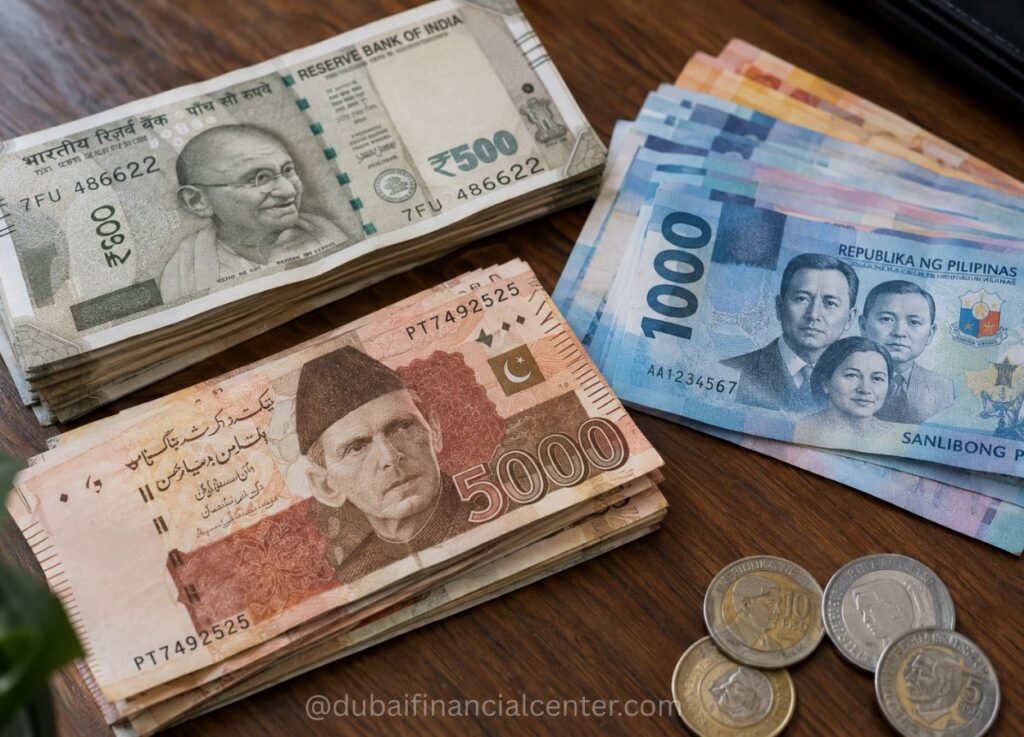
Concurrently, the Philippine peso weakened to 16.96 per dirham, having traded in a range of 16.00 to 16.48 in recent conversion cycles, impacted by broader fiscal pressures affecting Manila’s sovereign trade balances and elevated domestic energy expenses. Meanwhile, the Pakistani rupee stabilised at 75.65 against the dirham, maintaining multi-month low levels that continue to benefit Pakistani workers sending money home.
Financial analysts and money exchange operators across the UAE note that favourable conversion values are prompting expatriate households to adjust their financial strategies. Rather than executing single lump-sum transfers, many foreign workers are adopting staged remittance plans. Individuals are choosing to split transfers into multiple transactions, locking in substantial conversion gains on a portion of their monthly earnings immediately while withholding remaining capital in anticipation of further exchange rate shifts.
With South Asian and Southeast Asian economies continuing to face external monetary pressures, financial experts advise foreign workers to closely monitor market movements before finalising major international currency transfers. Dubai Financial Center