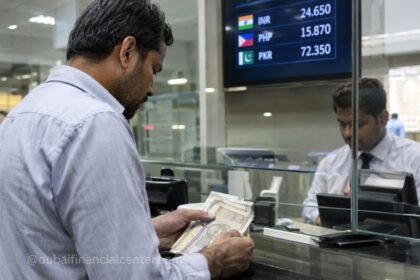



The continued strength of the UAE Dirham relative to important emerging markets’ currencies from South and Southeast Asia has resulted in a considerable rise in the outflow of money remittances from the Gulf country due to expatriates taking advantage of profitable currency rates to repatriate funds back home.
Analysts from the foreign exchange markets and regional money transfer organisations indicate an increase in transactions, largely as a result of expatriates living in the UAE who are from India, Pakistan, and the Philippines. The UAE dirham, which is pegged to the US dollar, has been relatively strong due to rallies in the US dollar, while important Asian currencies have suffered due to domestic inflation and other factors
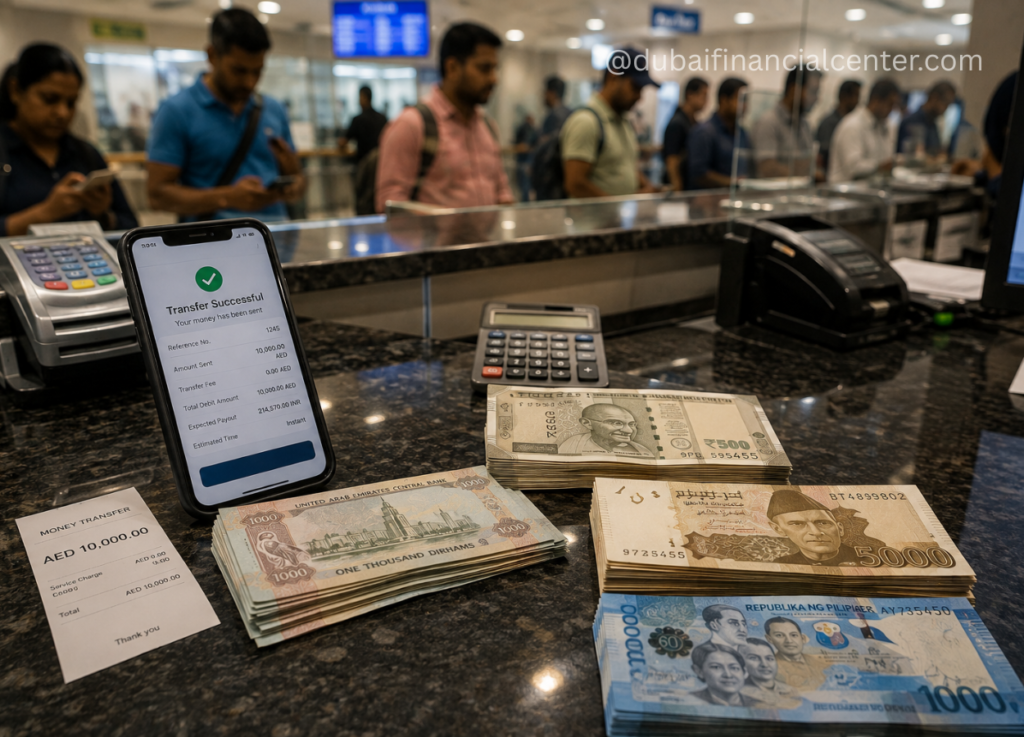
Financial market experts note that the Indian Rupee reached record low valuations against the Dirham, while both the Pakistani Rupee and Philippine Peso experienced pronounced fluctuations across recent international trading sessions. The resulting boost in the real purchasing power of tax-free Dirham earnings has encouraged foreign residents to expedite scheduled family support remittances, clear home-country debt obligations, and lock in attractive exchange margins through strategic lump-sum money transfers.
Remittance industry executives strongly advise expatriate workers to adopt disciplined transfer strategies rather than relying on unpredicted market speculation. Many foreign residents are utilising a phased remittance approach—dispatching a substantial portion of their savings immediately to secure elevated current exchange rates while retaining secondary financial liquidity in the event that home currencies depreciate further in subsequent weeks.
In response to the sharp surge in customer demand, licensed exchange houses and digital remittance platforms throughout the United Arab Emirates have expanded operational capacities, rolled out competitive fee promotions, and scaled up zero-fee digital transfer channels. Industry leaders anticipate that cross-border remittance activity across primary Asian corridors will remain exceptionally buoyant as ongoing global macroeconomic volatility continues to dictate regional currency valuations and cross-border trade flows across the region.